
Cultural Readiness for Internationalization (CRI) of Higher Education
Interlocking Frameworks
Ideaology | University Culture | Culture Levels | Multi-Level Analysis | Cohesion & Orientation | Triple Helix | Enabling Environment
Less Drift, More Direction
The University Governance Compass
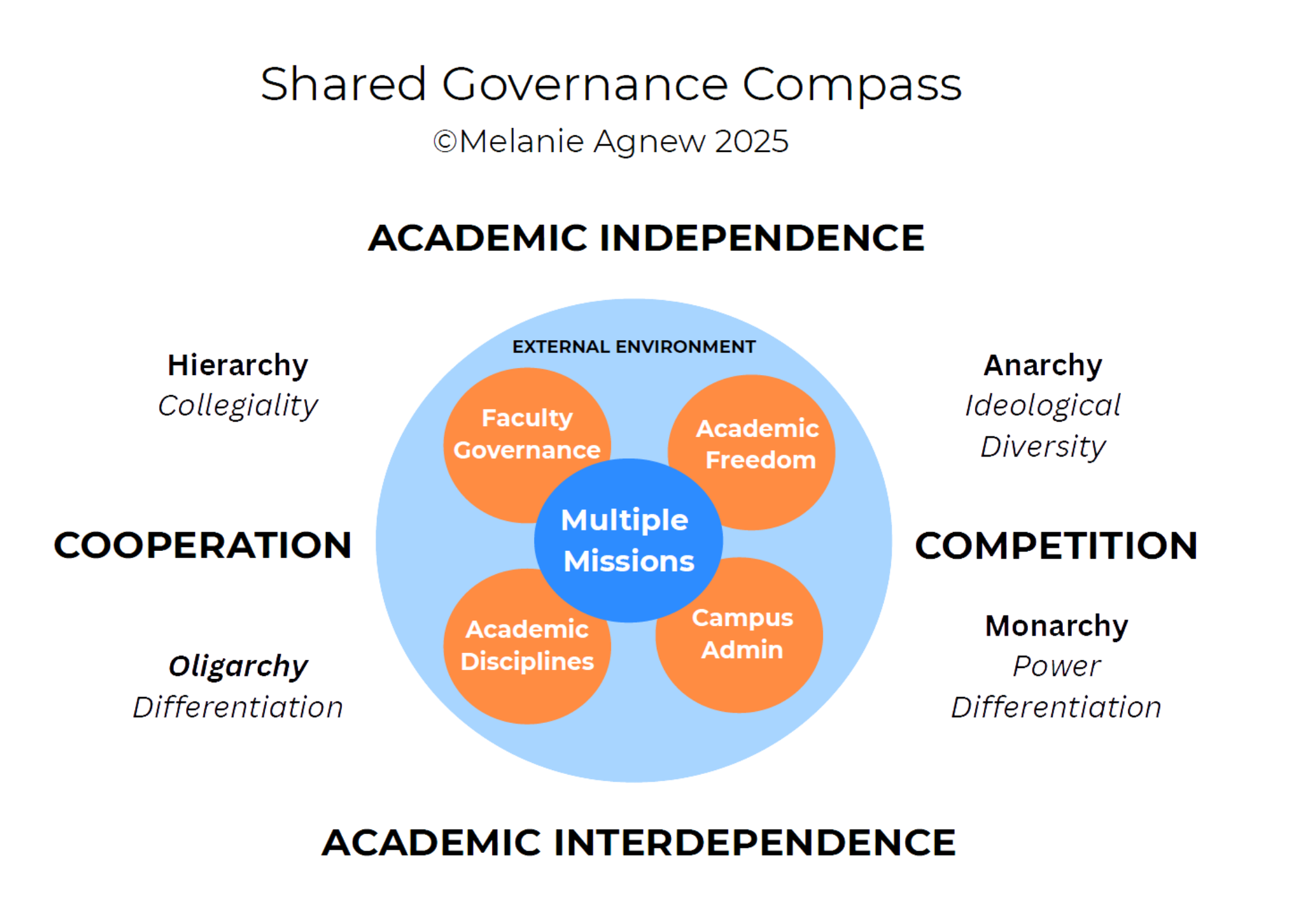
The University Governance Compass is the first governance diagnostic ever developed for internationalization in higher education. It maps where power actually sits in an institution, and how governance culture either enables or obstructs global engagement.
Governance is where internationalization initiatives ultimately succeed or fail. Faculty opposition, administrative overreach, disciplinary silos, competing missions — these are governance dynamics. The Compass gives institutional leaders language and a diagnostic lens for something they have been navigating intuitively.
The Compass positions institutions across two axes—academic independence to interdependence, and cooperation to competition—and identifies four governance orientations: Hierarchy, Monarchy, Anarchy, and Oligarchy. Each has a distinct profile for how internationalization will be received and where resistance will emerge.
The Cultural Readiness for Internationalization (CRI) Model
The Cultural Readiness for Internationalization (CRI) Model is an organizational change framework that positions institutional culture and context at the heart of its design. Developed through research across five U.S. institutions, the CRI is the first and only cultural diagnostic framework developed specifically for higher education internationalization.
Most internationalization efforts are built at the surface and exist on the peripheral of higher education institutions— programs, partnerships, policies. These are visible and tangible, but they are fragile. The CRI model goes deeper. It surfaces the cultural systems that either support or undermine global engagement, making visible what is otherwise invisible. The CRI model tempers a university’s external environment, making internationalization sustainable.
Where Does Your Institution Actually Sit?
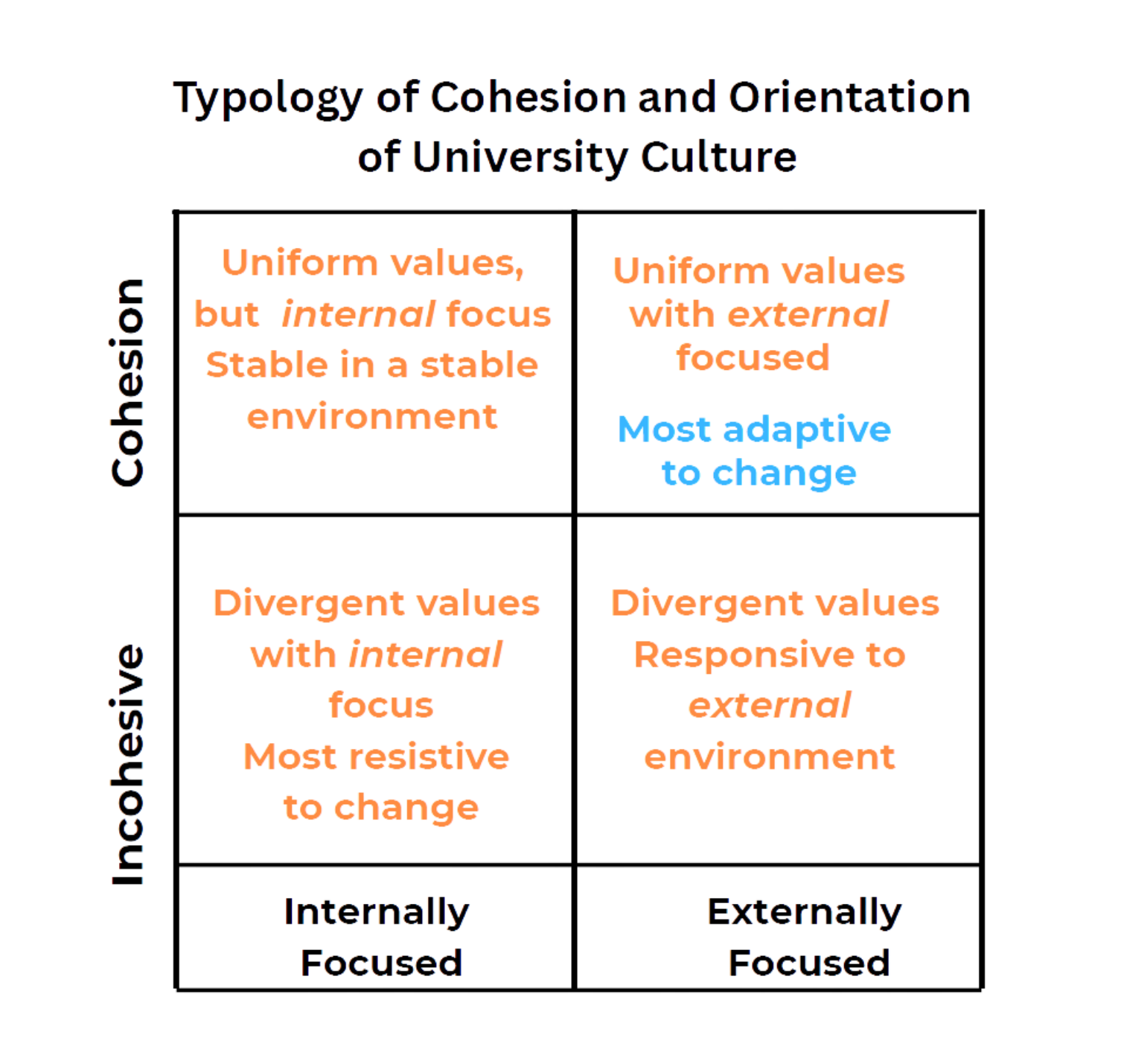
The CRI model assesses institutional culture across two dimensions: how cohesive its values are internally, and whether its orientation is primarily inward or outward-facing. The most adaptive institutions—most positioned for sustainable internationalization—are those with cohesive values and an external orientation.
The critical insight: many institutions believe they are externally oriented because they have international programs. The CRI tests whether that external orientation is embedded in culture or exists at surface-level in programs that do not yet reflect what the academic community believes or how shared governance operates.
Is your institution’s commitment to global engagement embedded in how it actually operates, or does it exist only in your programs and strategic plan?
Internationalization Has Multiple Meanings
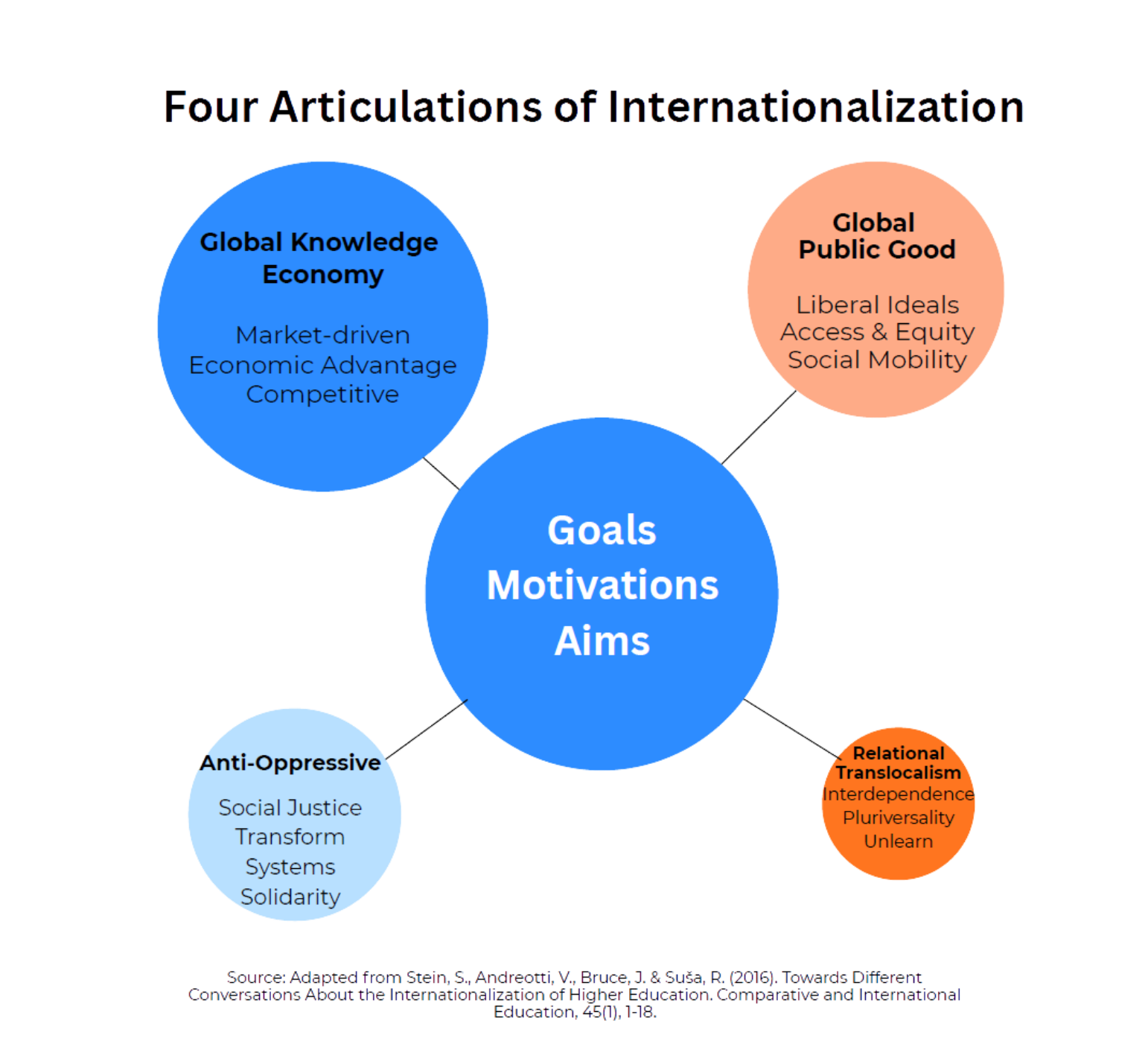
Internationalization is a choice among fundamentally different orientations—each with different goals, motivations, and assumptions about the role of the university in the world. Researchers Stein, Andreotti, Bruce, and Suša identify four distinct articulations:
Global Knowledge Economy — Market-driven, competitive, focused on economic advantage and rankings. The dominant model globally.
Global Public Good — Internationalization as a force for shared progress, liberal ideals, access, and equity.
Anti-Oppressive — Challenges colonial assumptions. Asks: who benefits, whose knowledge counts, who bears the costs?
Relational Translocalism — Sustained, place-rooted, mutually accountable partnerships — not extractive exchange.
Most institutions have never explicitly named which of these orientations is driving their internationalization work. The CRI begins there—making that choice conscious, rather than leaving it to drift.
Less Drift. More Direction.
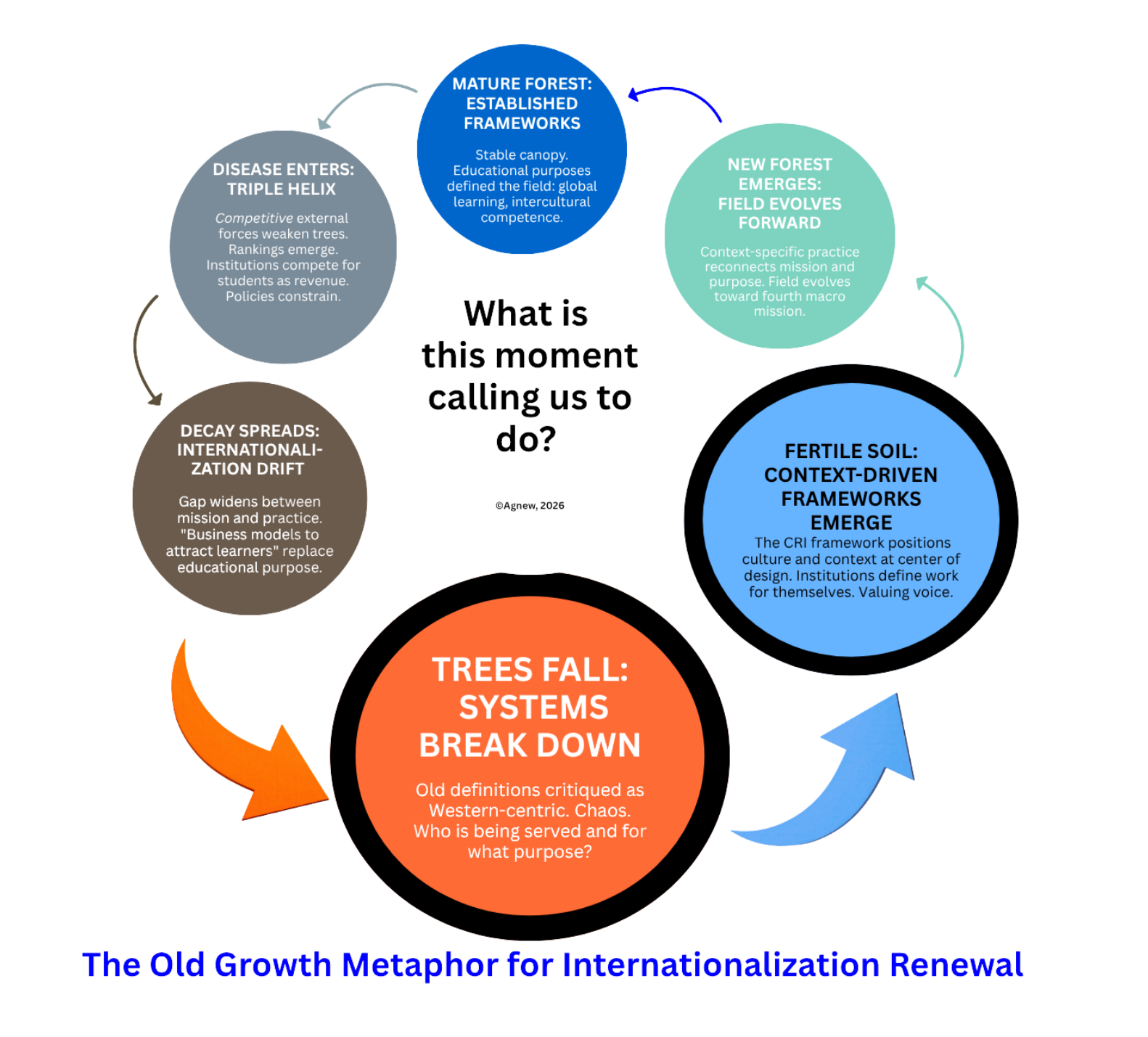
The field of internationalization has drifted. What began as a commitment to cultural exchange, global citizenship, and mutual understanding has increasingly been displaced by market logic—rankings, revenue, and competitive positioning.
The Old Growth Metaphor maps this trajectory from the established frameworks that defined the field, through the disease of competitive market forces, the decay of mission drift, and the breakdown of old definitions. It moves toward a new forest, where context-driven frameworks reconnect mission and purpose.
The CRI is part of that new forest. It positions culture and context at the center of its design, enabling institutions to define their internationalization work for themselves, grounded in their own values, their own governance realities, their own communities.
Internationalization in the Context of the Disciplines
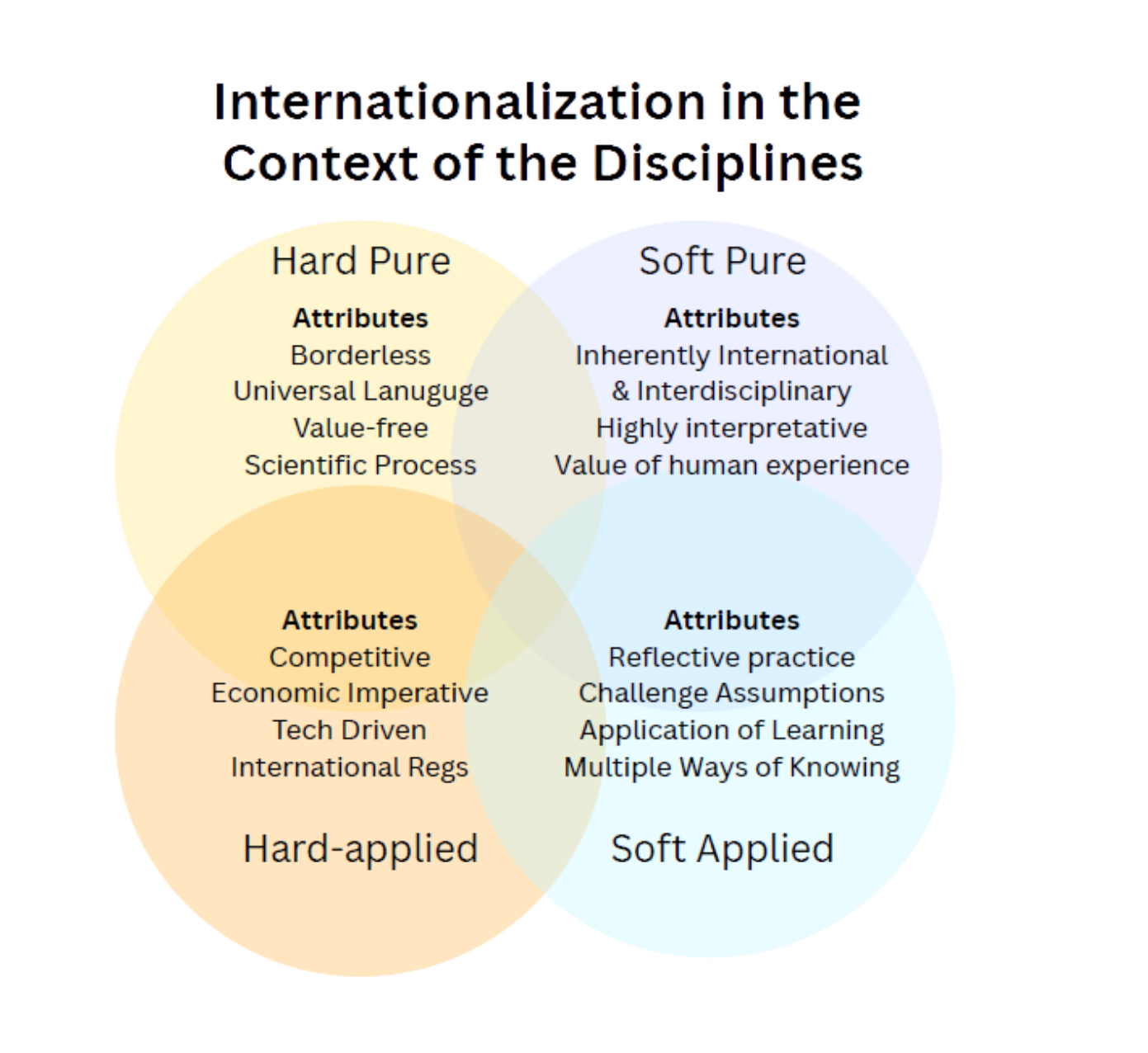
Not all disciplines internationalize the same way, and a framework that ignores this will miss some of the most important cultural dynamics shaping an institution's readiness.
The CRI draws on Becher and Trowler's disciplinary typology to map how four disciplinary cultures—Hard Pure, Soft Pure, Hard Applied, and Soft Applied—each carry distinct assumptions about knowledge, value, and international engagement. Hard Pure disciplines tend to be borderless and value-free in their epistemology, operating through a universal scientific language. Soft Pure disciplines are inherently international and interdisciplinary, grounded in the value of human experience. Hard Applied fields are competitive, economically driven, and shaped by international regulations. Soft Applied disciplines emphasize reflective practice, multiple ways of knowing, and the application of learning across contexts.
These distinctions matter because internationalization looks different — and is supported and resisted differently—in each disciplinary culture. The CRI makes those differences visible and workable.
How the CRI Works
The CRI diagnostic examines institutional readiness across seven interlocking dimensions:
Multi-level analysis — Examines internationalization readiness across faculty (micro), deans (meso), and senior leadership (macro) levels.
Three levels of culture — Diagnoses organizational culture through artifacts, values and beliefs, and underlying assumptions to surface what is driving or impeding change.
Cohesion and orientation — Assesses the degree to which institutional culture is unified and how it is positioned relative to its internal and external environments.
Ideology analysis — Examines the dominant narratives and belief systems shaping how internationalization is understood and pursued.
University culture — Defined through its core components: academic disciplines, academic freedom, shared governance and its sub-cultures, and institutional autonomy.
The Triple Helix — Situates the institution within the dynamic, competing pressures of market, state, and education.
Enabling environment — The external context of international networks, local business communities, and government authorities that simultaneously constrain and create opportunity.
The CRI is currently in its international validation phase. A small cohort of institutions is invited to participate as no-cost pilot partners, receiving a full cultural readiness diagnostic report in return. If this work resonates with where your institution is right now, let’s start with a 20-minute conversation.